Before Hannah’s freshman year
The Baker Family Moves
[Hannah Baker](entity:character-recall-character-hannah-baker-942ca777038d) moves with her family to a new town after her parents buy a shoe store. The move gives her a chance to start over, and she hopes to control how classmates see her rather than carry old rumors into a new school.
When Hannah was five
The Rocket Slide Rescue
As a young child, Hannah climbs the rocket structure at a playground and becomes too frightened to climb down. Her father cannot fit through the bars, so a female firefighter rescues her. The memory later makes the rocket slide a symbol of innocence and a setting for her first kiss.
The summer before Hannah’s freshman year
The First House Encounter
Living next door to Hannah, Kat tells her about [Justin Foley](entity:character-recall-character-justin-foley-90e8a0b9b440), who has been interested in Kat. Hannah and Kat watch Justin and [Zach Dempsey](entity:character-recall-character-zach-dempsey-e2d184557d67) approach the house; Justin slips on the wet lawn and [Zach](entity:character-recall-character-zach-a42a0f915cfe) tumbles beside him as the girls laugh from the window.
At Kat’s going-away party, before freshman year
The First Awkward Conversation
At Kat’s farewell party, [Clay Jensen](entity:character-recall-character-clay-jensen-c92963adbbda) notices [Hannah Baker](entity:character-recall-character-hannah-baker-942ca777038d) and struggles to speak with her. When he cannot tie his frozen shoelace, Hannah offers to help, but he refuses and escapes inside to warm his fingers. The brief encounter becomes an early memory of the connection Clay later wishes he had pursued.
Early in freshman year
Hannah Gives Justin Her Number
After Hannah begins playing hard to get, Justin waits near her classes and eventually asks for her phone number. Hannah has practiced giving it to him and is thrilled when she finally gives him the correct number; the two exchange matching excuses to their mothers about calling over a math problem.
Early in freshman year
The First Kiss
Hannah and Justin meet at Eisenhower Park, where Hannah climbs the rocket slide and then slides down into Justin’s arms. They kiss and later share another kiss on the swings, after which they part ways. For Hannah, the encounter is innocent and precious, but Justin’s later bragging helps turn it into the starting point of a damaging rumor.
A week or so after the first kiss
The Kiss Rumor Spreads
Stories circulate that Hannah and Justin did far more at the park than kiss. Hannah hears the rumor and recognizes that she cannot simply disprove it; classmates begin treating her through the sexual reputation it creates. The false account stains a memory she had hoped would remain special and sets the novel’s snowball effect in motion.
Freshman year, after the first-kiss rumor
The Class List Appears
[Alex Standall](entity:character-recall-character-alex-standall-5136c0c53269) circulates the “Who’s Hot / Who’s Not” list, naming Hannah as having the best ass in the freshman class and placing [Jessica Davis](entity:character-recall-character-jessica-davis-625e6f28ee39) on the opposite side. The list is framed as a joke, but its public ranking encourages students to view and treat the girls as body parts rather than people.
After Alex’s list circulates
The Liquor Store Groping
At [Blue Spot Liquor](entity:location-recall-location-blue-spot-liquor-493e99b26ff4), a boy invokes Hannah’s ranking and grabs her butt. When she rejects the touch, he seizes her wrist and shoulder, then dismisses her objection by telling her to relax. Hannah understands that the list did not literally grant permission, but gave him an excuse for behavior he already wanted to impose.
One week before freshman year begins
The New Students Meet
Guidance counselor Ms. Antilly introduces Hannah and [Jessica Davis](entity:character-recall-character-jessica-davis-625e6f28ee39) as new students. The meeting is awkward at first, but the girls laugh together and walk downtown, where they encounter [Alex Standall](entity:character-recall-character-alex-standall-5136c0c53269) at [Monet’s](entity:location-recall-location-monet-s-5e0eaecbd75e) Garden Café & Coffeehouse. The three begin spending time together there, finding a temporary refuge from the uncertainty of a new school.
The first weeks of freshman year
The Café Becomes a Haven
Hannah, Jessica, and [Alex](entity:character-recall-character-alex-ad819204cb8d) use [Monet’s](entity:location-recall-location-monet-s-5e0eaecbd75e) as a place to decompress when school feels difficult. They share drinks, talk about friendship, and invent an “olly-olly-oxen-free” ritual in which the person having the hardest day places a hand in the center of the table. Their small sanctuary makes the later rupture between them more consequential.
Later in freshman year
Alex’s List Reaches Hannah
When [Alex](entity:character-recall-character-alex-ad819204cb8d)’s list circulates at school, Hannah learns that she has been named the best-looking freshman while Jessica has been ranked least. Alex later acknowledges that his choice was partly revenge against Jessica. The list gives classmates a crude frame for reading Hannah and contributes to the distrust that breaks apart the trio’s early friendship.
After Alex’s list appears
The Café Friendship Breaks
Jessica brings the list to [Monet’s](entity:location-recall-location-monet-s-5e0eaecbd75e) and accuses Hannah of being involved with [Alex](entity:character-recall-character-alex-ad819204cb8d). Hannah insists that the rumors are false and explains that Alex chose her to hurt Jessica, but Jessica interprets Hannah’s words as an admission. Jessica strikes Hannah, leaving a scar above her eyebrow and ending their friendship at the place that had once sheltered them.
After the first party of freshman year
Tyler Begins Peeping
After a boy walks Hannah to her door while her parents are away, she hears a camera click outside her bedroom window. She tells herself she may have imagined it but is too frightened to call the police. [Tyler Down](entity:character-recall-character-tyler-down-9d5f13e74ea1) has been watching and photographing her from outside, turning her bedroom from a refuge into a place of fear.
The day after Hannah first hears the camera
Hannah and Courtney Set a Trap
Hannah tells [Courtney Crimsen](entity:character-recall-character-courtney-crimsen-756bb6d27d0f) about the suspected Peeping Tom, hoping for sympathy, but Courtney treats the idea as exciting. The two arrange to stay in Hannah’s room and pretend to gossip until the camera clicks; then they stage suggestive behavior to draw the watcher closer and expose him when Hannah jerks up the blinds.
The night Hannah and Courtney set the trap
Tyler Is Exposed
When Hannah and Courtney rush the window, [Tyler](entity:character-recall-character-tyler-ea3bef659768) flees before they can clearly see his face. Hannah identifies him the next day from his defensive response, and he stops coming to her house. The incident ends the visits but not their effect: Hannah now closes her blinds, loses her view of the stars, and no longer feels safe at home.
A later school party, after Tyler is exposed
The Party Photograph
Courtney invites Hannah to attend a party together, and Hannah agrees despite suspecting that Courtney is trying to repair her image. At the party, Courtney abandons Hannah and later spreads a fabricated story about what Hannah keeps in her dresser. Hannah confronts her and has [Tyler](entity:character-recall-character-tyler-ea3bef659768) take a photograph of the two of them together, forcing a record of the uneasy relationship into the open.
During the party at Courtney’s school gathering
Courtney’s Story Is Exposed
After hearing that Courtney has told others Hannah has sexual items in her dresser, Hannah insists that [Tyler](entity:character-recall-character-tyler-ea3bef659768) photograph them together. She pointedly references the invented accusation as they pose, and Courtney’s nervous expression gives away that the moment is not the effortless friendship she wants others to believe. The photograph later preserves a truth that Courtney’s polished public image conceals.
Around Valentine’s Day, freshman year
The Survey Goes in the Box
For the [Oh My Dollar Valentine](entity:expression-recall-expression-oh-my-dollar-valen-ad994c63a466) fundraiser, Hannah fills out a survey and describes the person she thinks she wants to date. After learning that a yearbook display includes her staged photograph with Courtney, she considers retrieving the survey but leaves it in the ballot box, afraid that boys may use the match list as another excuse to test rumors about her.
Valentine’s Day, after the survey results are printed
Marcus Calls Hannah
[Marcus Cooley](entity:character-recall-character-marcus-cooley-26aa36601b92) calls Hannah after paying to receive his Valentine matches and tells her she is his number one. Hannah agrees to meet him at [Rosie’s](entity:location-recall-location-rosie-s-348ace59739b) Diner for ice cream, partly swept up by the cheerleader’s excitement and partly willing to believe the invitation might be sincere. Marcus’s approach turns a lighthearted fundraiser into a date Hannah has reason to fear.
Valentine’s Day, after Hannah waits at Rosie’s
Marcus Arrives Late
Hannah waits alone at [Rosie’s](entity:location-recall-location-rosie-s-348ace59739b), believing Marcus may have stood her up, and orders a banana-and-peanut-butter shake after the prescribed fifteen minutes. Marcus eventually arrives and apologizes, saying he had thought their date might be a joke but turned back just in case. He moves them to a booth, where Hannah’s renewed willingness to trust him gives his next actions greater force.
Valentine’s Day, during the Rosie’s date
Marcus Touches Hannah
In the booth at [Rosie’s](entity:location-recall-location-rosie-s-348ace59739b), Marcus touches Hannah’s knee and moves his hand up her thigh despite her asking him to stop. He pulls her close and continues, while people nearby look over and then turn away. Hannah eventually shoves him to the floor and leaves, but the encounter deepens her conviction that even explicit distress may not make bystanders intervene.
Immediately after the Rosie’s incident
Zach Offers Comfort
After Marcus leaves, [Zach Dempsey](entity:character-recall-character-zach-dempsey-e2d184557d67) approaches Hannah and offers to buy her another shake. She cannot bring herself to respond or accept his apparent kindness, and he eventually returns to his friends. Although he tries to help in that moment, his later resentment over her silence leads him to interfere with the anonymous encouragement she receives at school.
Weeks after the Rosie’s incident
The Notes Disappear
In [Mrs. Bradley](entity:character-recall-character-mrs-bradley-3c321481eaf5)’s Peer Communications class, students leave supportive notes in one another’s paper bags. After Hannah’s haircut, she notices that her bag remains empty while everyone else receives messages. She writes herself a note to test what is happening, then catches [Zach](entity:character-recall-character-zach-a42a0f915cfe) taking it from her bag and realizes he has been stealing the notes meant for her.
After she catches him taking the note
Hannah Confronts Zach
Hannah confronts [Zach](entity:character-recall-character-zach-a42a0f915cfe) in the hallway and demands to know why he took the notes. He leaves without explaining or apologizing, while she breaks down in front of students passing between classes. To Hannah, the stolen notes are not trivial: she had been relying on them for reassurance, and Zach’s silence makes her feel unworthy even of an explanation.
After the notes stop coming
Hannah Writes the Warning Note
Hannah places an anonymous note in [Mrs. Bradley](entity:character-recall-character-mrs-bradley-3c321481eaf5)’s bag saying that suicide is something she has been thinking about, though not too seriously. In class, students discuss possible help but complain that the anonymous writer has not identified herself; one student dismisses the note as attention-seeking. Hannah listens without revealing who she is, and the class’s response confirms how difficult it feels to ask for help.
After the warning note, during a short poetry course
Hannah Shares Her Poem
At a poetry group held at the public library, Hannah meets [Ryan Shaver](entity:character-recall-character-ryan-shaver-8ebbaf81b497) and exchanges notebooks with him after they talk about their work. Ryan recognizes that Hannah’s poem “[Soul Alone](entity:expression-recall-expression-soul-alone-47c77ad48c5f)” is more than an imagined plea for acceptance: it reflects her own wish to be seen and to stop overlooking herself. The encounter briefly gives Hannah an attentive reader and a language for her isolation.
After the poetry group
Ryan Publishes the Poem
Ryan takes Hannah’s poem from her notebook and publishes it in the [Lost-N-Found Gazette](entity:organization-recall-organization-lost-n-found-gaz-29882c2c0c93) as though it were a found item. Students and teachers analyze it without understanding its personal meaning, and some classmates parody it to mock Hannah. The public exposure turns her private attempt at self-understanding into another source of humiliation.
Summer at the Crestmont, before the party
Clay and Hannah Reconnect
Clay and Hannah work together at the [Crestmont](entity:location-recall-location-crestmont-c11213f45602) and find it easy to talk when they are alone. Clay likes Hannah and watches for chances to spend time with her, but he hides his interest when others are nearby because of her reputation. Their shy, unspoken closeness gives their later night together the promise of something that might have changed both their lives.
During the summer at the Crestmont
Clay Watches Bryce at Work
At the theater, Clay sees [Bryce Walker](entity:character-recall-character-bryce-walker-13d65f1b8b4d) behave crudely toward a girl and later watch Hannah laugh with him at the concession stand. Clay wants to intervene but assumes Hannah should tell Bryce to leave herself. When he asks why she kept talking to Bryce, Hannah says she does not need Clay to watch out for her, leaving him unsure whether his concern was welcome.
Before the party, after Hannah’s early poems
Clay Learns the Meaning of Poetry
Hannah uses poetry to examine her feelings, first with straightforward verses and later with work that reaches deeper than she consciously understands. Her poem “[Soul Alone](entity:expression-recall-expression-soul-alone-47c77ad48c5f)” reveals how she wants to be known beyond appearance and rumor. After her notebook is exposed, she stops writing, losing a private means of making sense of herself.
The night of the party at 512 Cottonwood
The Party Invitation
Hannah is grounded because her grades have fallen, but she sneaks out after learning that [Clay Jensen](entity:character-recall-character-clay-jensen-c92963adbbda) will be at the party. She walks there through warm, misty weather, briefly feeling that life still holds possibilities. Clay has heard she will attend and pushes past his fear to return to the party and speak with her.
Early in the night at 512 Cottonwood
Hannah and Clay Talk
Hannah and Clay meet in the kitchen and begin a personal conversation that feels easy and unusually honest. They sit together on a couch and then move away from the noisy party, laughing and speaking privately. For both, the conversation offers the connection they had wanted but had been too afraid to pursue.
Later that night at 512 Cottonwood
The Kiss in the Bedroom
Alone in a bedroom, Hannah and Clay kiss and lie together on the bed. Clay believes the moment could be the beginning of a relationship, but Hannah suddenly remembers the earlier rumors and the shame attached to her reputation. She stops him, pushes him away, and asks him to leave; Clay obeys, though he is frightened and wishes he had understood what she needed.
Immediately after Clay leaves the bedroom
Hannah Breaks Down
After Clay goes, Hannah slides off the bed and cries on the floor, overwhelmed by the accumulated memories and distrust that surfaced during their kiss. Clay leaves the house and wanders away, believing the connection has ended. Neither speaks to the other again that night, and the possibility of a direct conversation is lost.
Later that night at 512 Cottonwood
Jessica and Justin Enter the Room
After Clay leaves, [Jessica Davis](entity:character-recall-character-jessica-davis-625e6f28ee39) is heavily intoxicated and [Justin Foley](entity:character-recall-character-justin-foley-90e8a0b9b440) helps her into a bedroom. Justin leaves her there, but [Bryce Walker](entity:character-recall-character-bryce-walker-13d65f1b8b4d) later asks to enter, claiming he has only a few minutes before work. Justin does not stop him. Hannah, hiding in the room’s closet, hears Bryce approach Jessica and understands that an assault is taking place but is too overwhelmed to emerge.
During the same party night
Bryce Assaults Jessica
Bryce enters the room and sexually assaults Jessica while she is incapacitated. Hannah remains hidden in the closet, frozen by fear and emotional collapse; Justin has already allowed Bryce into the room and does not intervene. The event later becomes one of Hannah’s most painful sources of guilt, even though Bryce is the one who commits the assault.
After Bryce leaves the bedroom
Hannah Finds Justin
Hannah finally leaves the closet and sees Justin sitting alone in another room, exhausted and blank. She understands that he and she both had a chance to stop what happened to Jessica and that both failed to do so. Hannah later places Justin at the beginning of the chain of events that began with her first kiss and ended in repeated harm to others.
Late that night, after the assault
Hannah Leaves the Party
Hannah leaves the party with [Jenny Kurtz](entity:character-recall-character-jenny-kurtz-e4bc27461bd3), who offers her a ride and treats her gently without demanding an explanation. Jenny’s car strikes and knocks down a stop sign; Hannah urges her to stop driving, but Jenny leaves the sign behind and drives away. Hannah later realizes that the missing sign contributed to a fatal collision at the intersection.
Later the same rainy night
The Fatal Collision
At the intersection where Jenny has left the stop sign down, an elderly man’s car collides with a car driven by a student from Hannah’s school. Clay reaches the crash scene and helps the elderly driver, who is desperate to contact his wife, while the other driver is in worse condition. Clay goes to the man’s house to reassure his wife, not knowing the family once lived in Hannah’s former home.
After the collision, still during the party night
Hannah Calls the Police
After leaving Jenny, Hannah wanders for hours and finally uses a payphone to call the police about the crash. The dispatcher tells her officers have already been called, but Hannah later learns Jenny did not report the fallen sign and that another caller reported the collision. Hannah realizes that she could have insisted more forcefully or called herself before Jenny drove away.
Days after the fatal collision
The Funeral Day
A senior student dies in the crash, and many classmates attend his funeral or are allowed to miss school for it. Hannah stays away because she knows the fallen stop sign contributed to the death and believes she might have prevented it. At school, the quiet day gives her time to imagine her own funeral and wonder whether anyone would know what she meant to them.
Several days after the party
Hannah Gives Tony the Recorder
Hannah visits [Tony](entity:character-recall-character-tony-5974d3962a4a) and gives him her blue bicycle, saying he might need it if his old car breaks down. She then asks whether he has a portable recorder; Tony lends her one without asking why. Hannah’s sustained eye contact and tears are signs of distress that Tony recognizes only later, and the recorder becomes the means by which she creates her tape account.
Before her final day
Hannah Records the Tapes
Hannah records thirteen sides explaining how a series of actions, rumors, and failures to help affected her. She arranges the recordings for a sequence of listeners, gives the first set to Justin, and keeps another set as a safeguard against anyone breaking the rules. The tapes turn her private history into an account that forces each recipient to confront a role in the chain.
The day before Clay receives the package
Hannah’s Last Day
Hannah goes through her last day at school knowing she plans to die. She mails the tapes and maintains the outward appearance of an ordinary day, including brief exchanges with classmates. Her plan makes the tapes both a record of what happened and a final test of whether anyone will notice her distress before it is too late.
Hannah’s final day, after school
Hannah Asks Porter for Help
Hannah meets with [Mr. Porter](entity:character-recall-character-mr-porter-02e36aef3c00), her English teacher and guidance counselor, and tells him she feels empty and wants everything, including life, to stop. She describes a painful incident with an older boy but struggles to explain it and does not want to press charges. Porter offers confronting the boy or trying to move on, and Hannah leaves feeling that no one has understood how urgently she needs help.
After her final day at school
Hannah’s Death
Hannah dies by suicide after taking pills. The school community is left with an empty desk and uncertainty about how to discuss her death, while her parents’ shoe store remains closed as they deal with the loss. The recordings later reveal the private distress and sequence of harms that many classmates had never seen.
A few weeks after Hannah’s death
The First Package Arrives
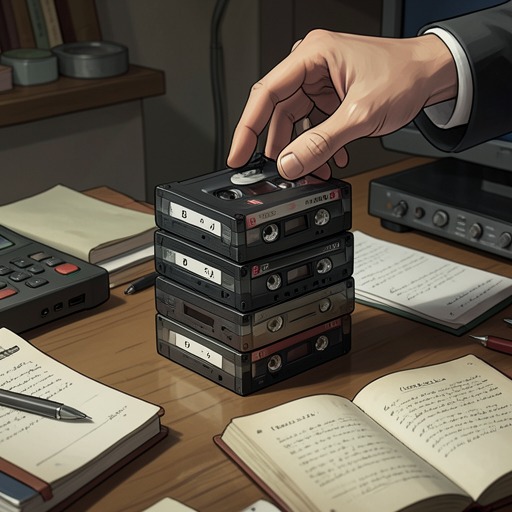
Clay finds a shoebox on his porch containing seven cassette tapes, each marked with a blue number, and discovers that his old garage stereo can play them. Hannah’s voice announces that each recipient has a part in her story and must listen before passing the tapes along. She says she made copies that will become public if the chain is broken.
The evening he receives the tapes
Clay Learns the Tape Rules
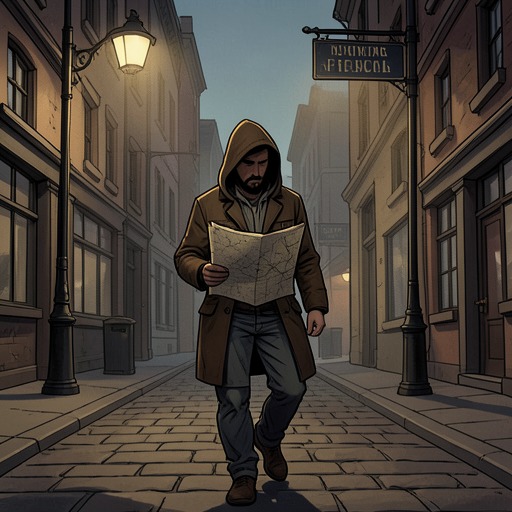
Clay hears that recipients must listen to all thirteen sides, rewind the tapes, and pass them to the next person. He also discovers the map Hannah sent him earlier, marked with red stars for places connected to the stories. Unsure whether the package is a mistake or a threat, Clay realizes that he is on Hannah’s list and continues listening.
The first tape, that evening
Justin’s Story Begins
Hannah tells Justin that he was her first kiss and that their brief relationship mattered because of what followed. She recounts their meeting at the rocket slide and corrects the rumor that they had done more than kiss. Clay recognizes how a false story, once attached to a name, shaped how he and other students saw Hannah.
That evening, after hearing Justin’s story
Clay Visits Hannah’s Former House
Clay goes to Hannah’s former home, where another family now lives, and tries to picture her watching Justin and [Zach](entity:character-recall-character-zach-a42a0f915cfe) approach the house years earlier. The visit makes him wonder whether small accidents could have redirected their lives and even prevented the rumors. The questions lead him toward the next marked location, [Blue Spot Liquor](entity:location-recall-location-blue-spot-liquor-493e99b26ff4).
Later that evening
Clay Visits Blue Spot
At [Blue Spot Liquor](entity:location-recall-location-blue-spot-liquor-493e99b26ff4), Clay buys the kind of candy Hannah used to get there and asks whether Wally still works at the store. As he sits outside, Hannah’s account of the groping explains how [Alex](entity:character-recall-character-alex-ad819204cb8d)’s list became an excuse for a boy to touch her and then intimidate her. Clay begins to grasp that the list’s consequences extended beyond the person who wrote it.
Later that evening, between marked locations
Clay Boards the Night Bus
Cold and exhausted, Clay boards a city bus without checking where it is going. He listens as Hannah describes her early friendship with Jessica and [Alex](entity:character-recall-character-alex-ad819204cb8d) at [Monet’s](entity:location-recall-location-monet-s-5e0eaecbd75e), their shared ritual, and the eventual collapse of the group. The moving bus gives Clay a temporary refuge while the recordings force him to reconsider the people he thought he understood.
After Alex’s list, recalled on the bus
Hannah and Jessica’s Rupture
Hannah explains that Jessica confronted her at [Monet’s](entity:location-recall-location-monet-s-5e0eaecbd75e), believing rumors that Hannah and [Alex](entity:character-recall-character-alex-ad819204cb8d) had become involved. Hannah insisted the rumors were false, but Jessica heard the admission she expected and struck her. The scar became a lasting reminder that Jessica chose the rumor over the friendship they had formed.
That evening, after leaving the bus
Clay Finds Hannah’s Photograph
At [Monet’s](entity:location-recall-location-monet-s-5e0eaecbd75e), Clay finds a freshman-year scribble book and discovers a photograph of Hannah and Courtney at a party. Hannah is smiling while Courtney looks nervous, a contrast that makes Clay suspect the picture holds a story the yearbook never printed. He continues to the next location, carrying the image as a clue to Courtney’s role.
The next tape, while Clay travels toward Courtney’s house
Hannah Tells Courtney’s Story
Hannah recounts how Courtney invited her to a party but abandoned her after using her as a ride. When a boy repeats Courtney’s false claim about Hannah’s dresser, Hannah pulls Courtney into a photograph with [Tyler](entity:character-recall-character-tyler-ea3bef659768). Courtney’s nervous pose reveals the strain beneath her carefully sweet public image, and the photo preserves the confrontation rather than the performance.
That evening, on the bus near Courtney’s neighborhood
Skye Interrupts Clay
[Skye Miller](entity:character-recall-character-skye-miller-3f579d8b2b1d) calls to Clay from the seat behind him and asks whether he has missed his stop. She speaks cryptically and says she is not going anywhere, then ends the conversation. Clay leaves the bus, unsettled by her withdrawal and by the possibility that he is repeating the same pattern of failing to reach someone who is struggling.
Later that evening
Clay Finds Tyler’s Window
Clay reaches [Tyler Down](entity:character-recall-character-tyler-down-9d5f13e74ea1)’s neighborhood and sees a window held together with silver duct tape. [Marcus Cooley](entity:character-recall-character-marcus-cooley-26aa36601b92) appears with a rock and says others have already come to [Tyler](entity:character-recall-character-tyler-ea3bef659768)’s house. Clay refuses to throw it, challenges Marcus over his own place on the tapes, and leaves the rock on the sidewalk rather than joining the retaliation.
During the confrontation outside Tyler’s house
Clay Learns of Alex’s Retaliation
Marcus explains that [Alex](entity:character-recall-character-alex-ad819204cb8d) had already thrown a rock through [Tyler](entity:character-recall-character-tyler-ea3bef659768)’s window, and that another person had followed. Marcus offers Clay a rock as well, but Clay rejects the invitation and condemns the cycle of punishment. His refusal marks a choice not to turn knowledge of the tapes into another act of harm.
Later that night
Clay Reaches Rosie’s
Clay reaches [Rosie’s](entity:location-recall-location-rosie-s-348ace59739b) Diner and sits at the counter, following Hannah’s instructions about waiting there. His mother arrives with the shoebox he left at home, gives him money for a malted, and senses that something is wrong without pressing him to explain. Her quiet care contrasts with the painful stories he is hearing.
At Rosie’s, after Clay resumes the tapes
Zach’s Stolen Notes Explained
Hannah explained that after Zak did not respond to her at the Rosi restaurant, he stole the encouraging notes from the paper bag she used to leave class notes. Claire realized that Zak's behavior may have started from embarrassment, but the result was that he took away one of Hannah's few sources of
Late that night, in Tony’s car
Clay Hears His Own Story
[Tony](entity:character-recall-character-tony-5974d3962a4a) came to Rosi's restaurant and told Claire that the next tape would be about him. Claire heard Hannah say that he wasn't like the people she was blaming, but he had to listen to the whole story for it to be complete. She explained that she wanted to know him because his reputation
The night at 512 Cottonwood, recalled on Clay’s tape
Hannah Explains the Party Kiss
Hannah described the relaxed and pleasant feeling of talking to Claire at the party and confirmed that they kissed in the bedroom. When old rumors and memories pressed down on her, making it hard for her to breathe, she told him to stop and leave. Claire originally thought that respecting her request was the right
After hearing his tape
Clay Grieves with Tony
Claire broke down in [Tony](entity:character-recall-character-tony-5974d3962a4a)'s car, admitting he missed Hannah; before hearing her story, he had never truly allowed himself to acknowledge this feeling. Tony didn't urge him, just listened, then continued driving, letting Claire finish listening to the tape. Their conversation made Claire feel a brief sense of
Late that night, after Clay’s tape
Tony Explains the Second Set
[Tony](entity:character-recall-character-tony-5974d3962a4a) told Claire that Hannah had come to his house, gave him the bicycle, and asked him for a tape recorder. When the first tape arrived, Tony realized that Hannah was still alive and tried to contact her, but was unable to reach her before she died. Later, he found everyone who listened
The party night, recalled on the next tape
Hannah Explains Jenny’s Crash
Hannah described how Jenny's car hit the stop sign, and how Jenny drove away despite Hannah's pleas. The missing sign caused the accident that killed a student. Hannah blames herself for not taking a harder stand, even though it was Jenny who drove away, leaving the sign on the ground, and
After the accident, in the weeks before her death
Hannah Describes Her Despair
Hannah said that as the injuries in life accumulate, the thought of suicide reappears again and again. She described imagining possible ways of death and deciding to take medication, while admitting that she has not told most people how severe these thoughts have become. Her calm recording tone made this statement even more
Hannah’s final day, during the meeting with Mr. Porter
Hannah’s Last Apology
In the final tape, Hanna told Mr. Potter that she hoped everything would stop, and that she came to find him because she did not want her life to end. When Mr. Potter regarded facing the older boy or moving forward as her choice, Hanna could not tell which path would help her
Late that night at Eisenhower Park
Clay Finishes the Tapes
Clay climbed the rocket slide structure in Eisenhower Park, listening to the last tape, where the conversation between Hannah and [Mr. Porter](entity:character-recall-character-mr-porter-02e36aef3c00) ended. He collapsed against the metal railing, hearing her final apology and realizing the tapes could not bring her back. After the main content of the tape ended, a breath
The next morning
Clay Mails the Tapes to Jenny
Kle et post office opens, rewraps the shoe box, and sends the tape to the next person in the chain — Jane Kurts. He knows that this package will force her to face what happened that night at the accident, and the consequences of the parking sign lying on the ground
The next day, after mailing the tapes
Clay Returns to School
Klae is late, and when he arrives at school, he still cannot face [Mr. Porter](entity:character-recall-character-mr-porter-02e36aef3c00)'s classroom and Hannah's empty desk. He recalls how many times he has stood in front of the storage cabinet, afraid to speak to Hannah, and those opportunities are now gone. What he has heard
The next day, in the school hallway
Clay Calls to Skye
Clay saw [Skye Miller](entity:character-recall-character-skye-miller-3f579d8b2b1d) apologize quietly to a student in the corridor and then leave. He almost turned away again like the time on the school bus, but remembering that Hannah had disappeared into the crowd, he decided to follow her. Clay called out Skye's name, taking a small step toward